
 office
(+91)(0512) 2690015
office
(+91)(0512) 2690015
fax (+91)(0512) 2690015
Mobile (+91) 9839033104
HDPE Jars and Bottles
High-density polyethylene (HDPE) or polyethylene
high-density (PEHD) is a polyethylene thermoplastic made from
petroleum. It takes 1.75 kilograms of petroleum (in terms of energy
and raw materials) to make one kilogram of HDPE. HDPE is commonly
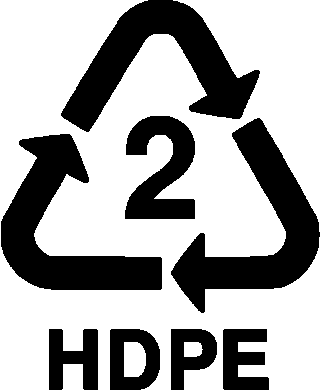
recycled, and has the number "2" as its recycling symbol. In 2007,
the global HDPE market reached a volume of more than 30 million
tons.
Properties
HDPE has little branching, giving it stronger intermolecular forces
and tensile strength than lower-density polyethylene. The difference
in strength exceeds the difference in density, giving HDPE a higher
specific strength.[2] It is also harder and more opaque and can
withstand somewhat higher temperatures (120 °C/ 248 °F for short
periods, 110 °C /230 °F continuously). High-density polyethylene,
unlike polypropylene, cannot withstand normally-required autoclaving
conditions. The lack of branching is ensured by an appropriate
choice of catalyst (e.g., Ziegler-Natta catalysts) and reaction
conditions. HDPE contains the chemical elements carbon and hydrogen.
Applications
HDPE is resistant to many different solvents and has a wide variety
of applications, including:
Arena Board (puck board)
Telecom Ducts
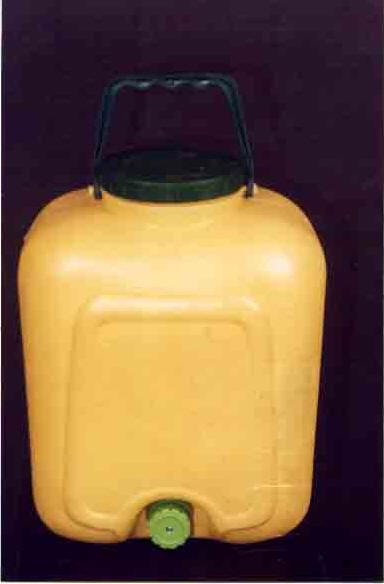
Containers
Laundry detergent bottles
Milk jugs
Fuel tanks for vehicles
Watering cans
Plastic lumber
Folding tables
Folding chairs
Storage sheds
Portable basketball system bases
Plastic bags
Geomembrane for hydraulic applications (canals, bank
reinforcements...) and the containment of certain chemicals
Chemical-resistant piping systems
Heat-resistant fireworks display mortars
Geothermal heat transfer piping systems
Natural gas distribution pipe systems
Water pipes, for domestic water supply
Coax cable inner insulators (dielectric insulating spacer)
Root barrier
Corrosion protection for steel pipelines
Tyvek
Snowboard rails and boxes
Bottles, suitable for use as refillable bottles
Modern hula hoops
Ballistic plates
Bottle Caps
Breast implants[citation needed]
HDPE is also used for cell liners in subtitle D sanitary landfills,
wherein large sheets of HDPE are either extrusion or wedge welded to
form a homogeneous chemical-resistant barrier, with the intention of
preventing the pollution of soil and groundwater by the liquid
constituents of solid waste.
One of the largest uses for HDPE is wood plastic composites and
composite wood, with recycled polymers leading the way.
HDPE is also widely used in the pyrotechnics trade. HDPE mortars are
preferred to steel or PVC tubes because they are more durable and
more importantly they are much safer compared to steel or PVC. If a
shell or salute were to malfunction (flowerpot) in the mortar, HDPE
tends to rip and tear instead of shattering into sharp pieces which
can kill or maim onlookers. PVC and steel are particularly prone to
this and their use is avoided where possible.
Milk bottles and other hollow goods manufactured through blow
molding are the most important application area for HDPE - More than
8 million tons, or nearly one third of worldwide production, was
applied here. Above all, China, where beverage bottles made from
HDPE were first imported in 2005, is a growing market for rigid HDPE
packaging, as a result of its improving standard of living. In India
and other highly populated, emerging nations, infrastructure
expansion includes the deployment of pipes and cable insulation made
from HDPE. The material has benefited from discussions about
possible health and environmental problems caused by PVC and
Polycarbonate associated Bisphenol A, as well as, its advantages
over glass, metal and cardboard.
Our USP :
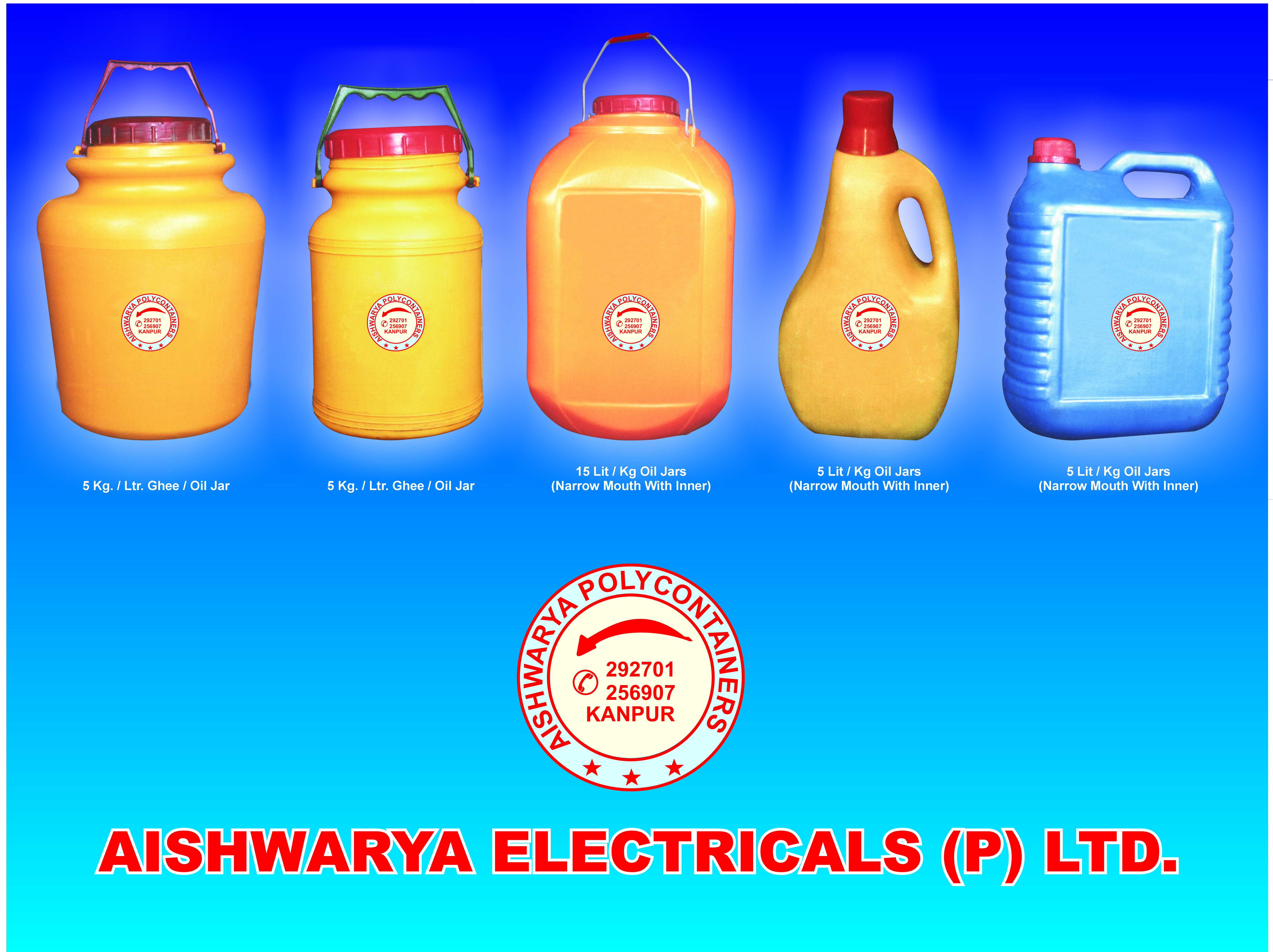
- We make HDPE Jars and Bottles from Parison Contolled Fully Automatic Machines
- Containers from 10ml to 30 ltrs are been made
- Only food grade virgin materials are used
- Printing on jars is done by automatic machines